
Posted by Diane Dewell on 27th Oct 2026
From Dial-Up to Downloads: Our eBay Story and the Start of Online Treasure Hunting
We have been buying and selling unusual industrial pieces since 1975, and by 1999 we were selling on eBay as surpluswarehouse, back when a single photo took minutes to upload over dial-up. The technology has changed completely. What people are looking for, something unusual they can't find anywhere else, hasn't changed at all.
Before Anyone Was Buying Antiques Online
eBay launched in 1995, and it is easy to forget how strange the idea was at the time. The first item ever sold on the site was a broken laser pointer, and it went for $14.83. Nobody involved in that sale could have guessed that within a few years, people would be buying furniture, artwork, and industrial machinery from strangers they had never met, based on a handful of photographs and a written description.
We were paying attention early. By 1999, Industrial Treasures, then operating as Dewell & Dewell, was selling on eBay under the name surpluswarehouse. We have kept that account and that name ever since, and we still carry 100% positive feedback from those years of selling online.
What Selling Online Actually Looked Like in 1999
If you weren't buying or selling online in the late nineties, it is worth explaining just how much friction was involved.
Photos had to be taken with an early digital camera or scanned in, then uploaded over a dial-up connection that made a single image feel like an event. A listing with more than two or three photos was a real time investment. There was no next-day shipping expectation and no instant checkout. Buyers often paid by money order and waited for it to arrive in the mail before an item shipped. A transaction that takes thirty seconds today could easily take a week back then.
None of that stopped people from buying. If anything, it filtered for buyers who really wanted the item, because nothing about the process was convenient. We were listing unusual industrial pieces, tools, and salvage items that people in our area weren't going to find anywhere nearby, and the internet was suddenly a way to put those items in front of someone who actually wanted them, regardless of where they lived.
What's Changed Since Then
Almost everything about the mechanics has improved. High-speed internet turned photo uploads from a chore into an afterthought. Digital cameras and now phones make it easy to photograph an item from every angle, including the details that actually matter to a buyer, like construction, wear, and maker's marks. Payment is instant. Shipping is trackable. A buyer three states away can see a piece, ask a question, and have it on the way to them the same day.
What that means for us is that the reach we had in 1999, which felt like a genuine novelty at the time, is now just the baseline. The audience for unusual, well-made, one-of-a-kind pieces is bigger than it has ever been, and it's easier for that audience to find us.
What Hasn't Changed
The part of this that hasn't changed at all is the actual appeal. People still want to find something unusual. They still want the thing that isn't sitting on a shelf at every other store, and they still get a particular kind of satisfaction out of being the one who found it. That was true of the buyers who waited a week for a money order to clear in 1999, and it's true of the person browsing on their phone tonight.
Our job hasn't changed either. Whether it's vintage furniture, original art and lighting, architectural salvage, or an industrial piece nobody else knows what to do with, the work is the same as it was on dial-up: find the interesting object, and connect it with the person who's actually going to want it.
Why We Were Ready for eBay: It Started in a Quonset Hut
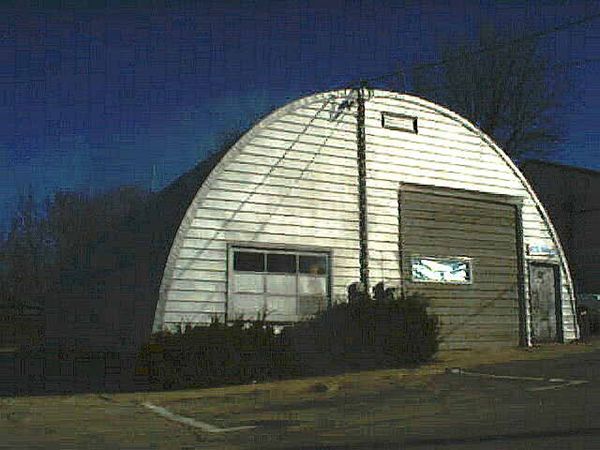
Our Quonset hut in downtown Batavia, which we bought in 1977.
Selling on eBay in 1999 wasn't a leap for us, because we had been buying and selling equipment for more than twenty years by then. We started in 1975 as a sole proprietorship called Dewell & Dewell, restoring vintage race cars. Our first shop was inside my family's machine shop in Addison, Anderson Manufacturing & Engineering Company, which gave us access to a full machine shop while we got started. In 1976 we rented a unit in Villa Park, and in 1977 we bought the Quonset hut in downtown Batavia. A race car restoration shop needs a lot of equipment, both general business equipment and specialized machinery and tools that are hard to find. Learning where to find those things, and what they were really worth, turned into a business of its own: liquidating equipment for other businesses. We became Dewell & Dewell, Incorporated in 1986.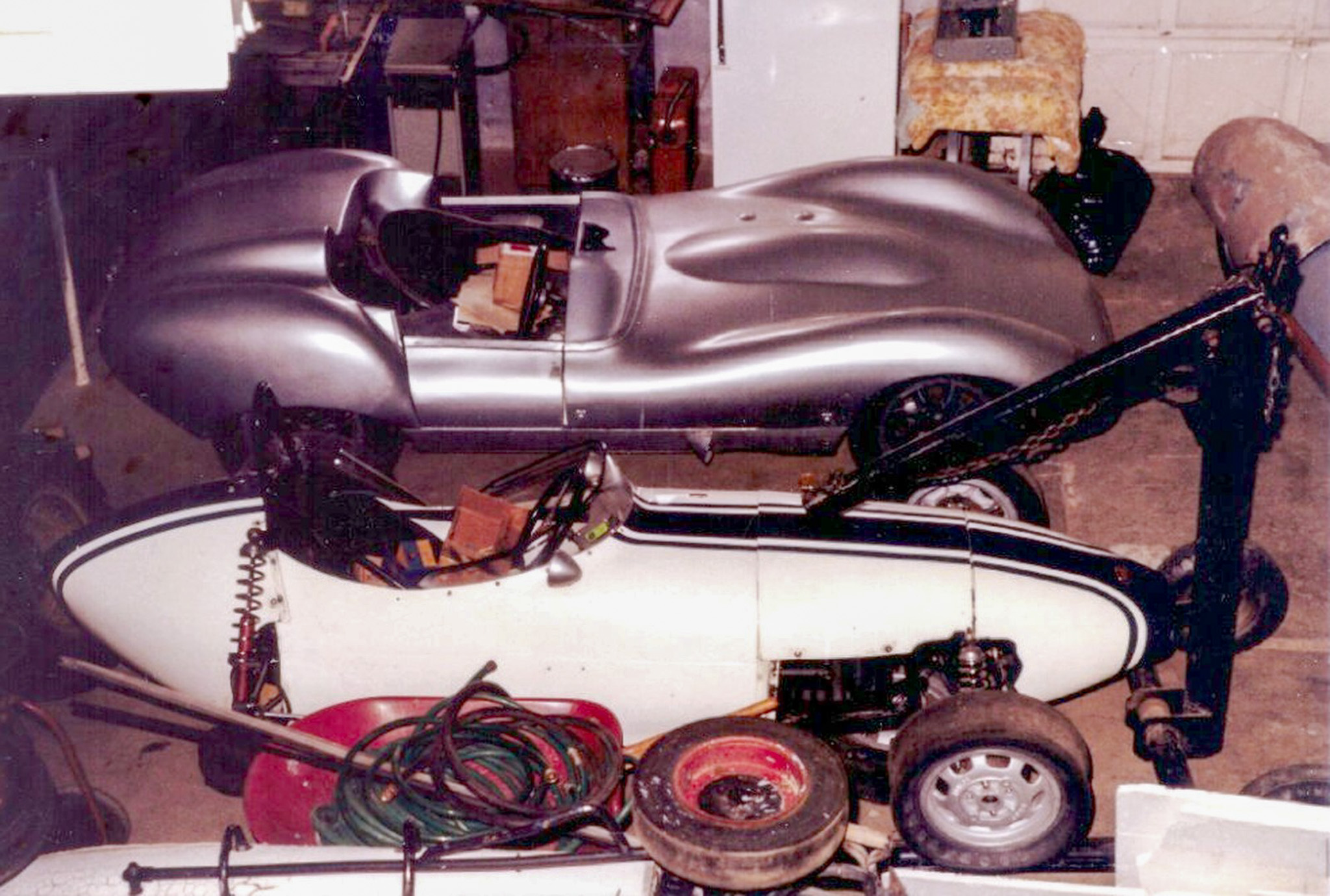
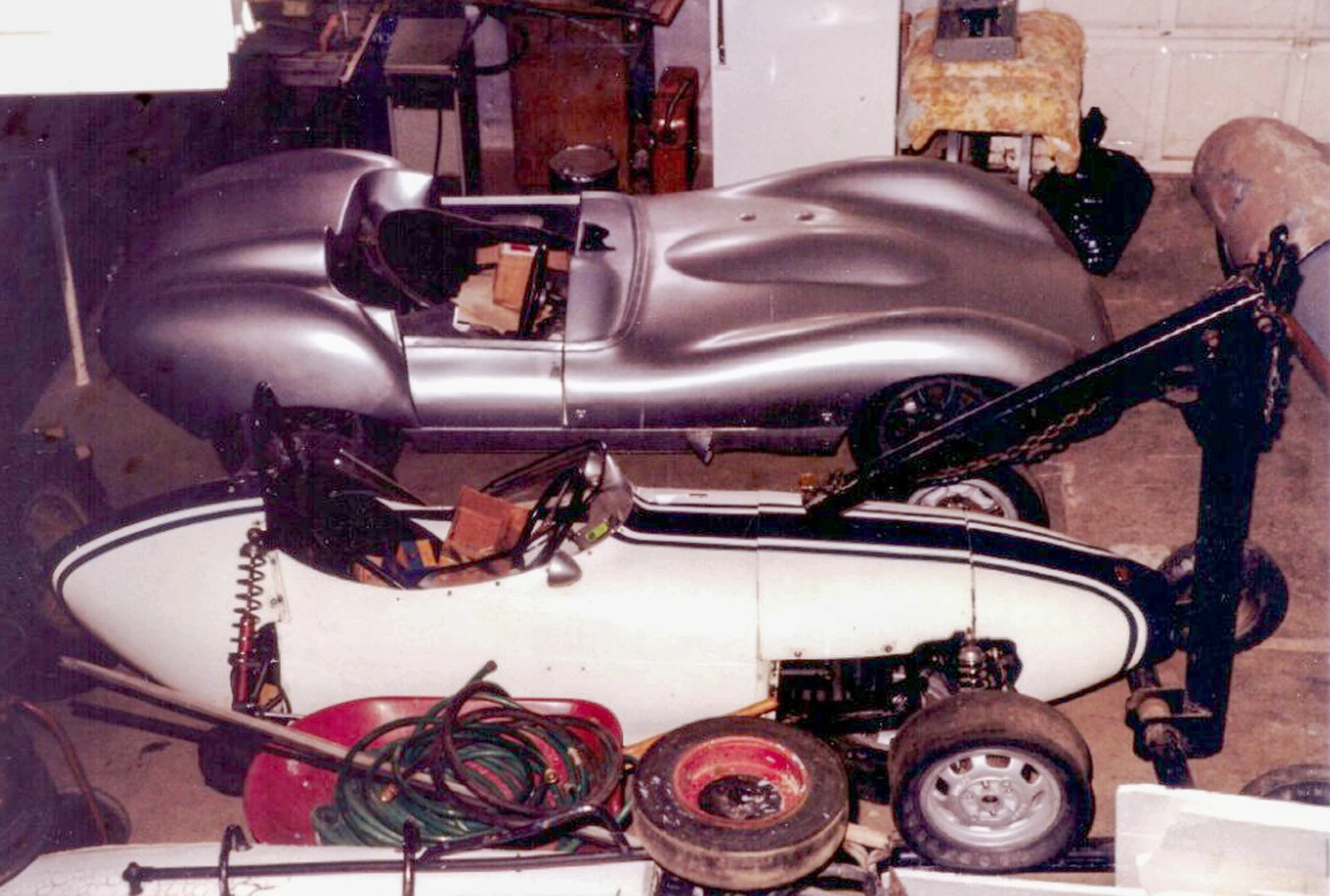
Two of our vintage race cars in our shop, February 1982: a 1959 aluminum-bodied Lola Mk1 sports racer (silver) and a circa-1960 BMC Formula race car (blue and white).
That is the real reason eBay made sense. By 1999 we already had a steady stream of unusual industrial pieces coming through the door and the know-how to evaluate them. The internet just gave us a much bigger room to show them in. You can read the longer version of how we got from race cars to a St. Charles showroom on our About Us page.
If you want to see what decades of that kind of sourcing looks like in person, Industrial Treasures is about 8,000 square feet in St. Charles, open Tuesday through Saturday from 10 AM to 5 PM and Sunday from 11 AM to 5 PM. Whether you find us online or walk in the door, the goal has stayed the same: help you find the piece you didn't know you were looking for.